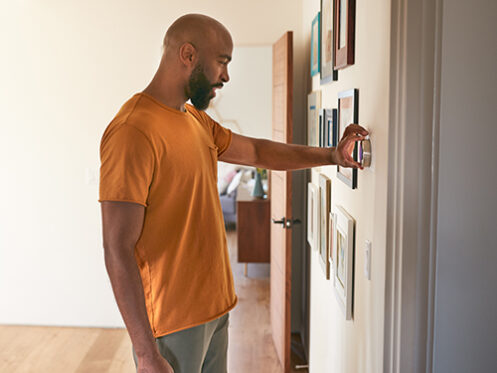
You walk to the thermostat and adjust it again, wondering why the temperature is all over the place. The den is always too cold, but the upstairs bedroom is always too warm. While adjusting the thermostat, you think about how the energy bills are creeping higher. You think it’s time for a new HVAC system. You never stop to consider that your outdated thermostat might be the problem.
Although small, a thermostat affects comfort, efficiency, and HVAC system performance. The older the thermostat, the more likely it is to struggle with modern HVAC equipment. When the thermostat can’t keep up, even a newer system won’t perform its best.
F.F. Hitchcock Plumbing, Heating & Cooling helps homeowners figure out if their thermostat works well with their HVAC system. If your thermostat is years behind, we’ll help you upgrade to a more efficient model. A smart thermostat installation is an upgrade that offers smoother temperature control and helps lower energy costs.
What an Outdated Thermostat Looks Like
An outdated thermostat is often easy to spot. You may have seen a typical pre-1980 thermostat at some point in your life. The typical model was a round thermostat with a cream-colored face, numbers circling the edge, and a dial to adjust the temperature. There was also one with a rectangular shape that you would adjust with a slider.
These models were cutting-edge for pre-1980 heating systems. A thermostat from this era might still function, but it will offer limited comfort and efficiency. You’ll have basic temperature control, with no features to support modern HVAC systems.
Common signs of an outdated thermostat include:
- Analog dials or sliders
- Basic digital displays
- No Wi-Fi connectivity
- Manual temperature changes only
Compared to newer models, older thermostats offer little flexibility. They don’t adjust to your daily routine, outdoor conditions, or energy use. Technology moves fast, and thermostats went along for the ride. Digital thermostats began appearing in homes in the mid-1980s. Technology never stops, and now automation, remote access, and more precise control are common features of modern thermostats.
How an Outdated Thermostat Affects HVAC Performance
An outdated thermostat sends basic on and off signals to heating and cooling equipment. It doesn’t adjust to changing indoor conditions. This may result in short cycling, which places added strain on your HVAC system.
Short cycling is when your HVAC system turns on, runs for a short time, then shuts off too soon. A few minutes later, the cycle starts all over again. Several factors can cause short cycling, but an outdated thermostat is among the most common.
The outdated thermostat only knows on and off, so the system stops the moment the temperature reaches a certain level. Some rooms will feel warm, while others haven’t had time to get warm enough. A few minutes later, the temperature shifts, and the thermostat tells the system to turn back on. All that starting and stopping wastes a lot of energy. It also takes a toll on the system, similar to how brakes will wear down if you’re constantly slamming them.
Energy Efficiency and Cost Concerns
Inefficient temperature control often leads to higher utility bills. So, not only is your comfort at risk, but your finances take a hit, too. When a thermostat lacks precision, the HVAC system works much harder than it should. That extra runtime translates into extra energy use.
One of the biggest problems with an outdated thermostat is the inability to schedule based on occupancy. Imagine leaving for a winter vacation and realizing you forgot to adjust the thermostat. The thought of the heat running all weekend in an empty house puts a damper on your trip.
Some smart thermostats adjust automatically depending on who is in your home. Even just a few degrees of adjustment can affect your energy bill. Check whether a model includes motion detection or location-based features before your smart thermostat installation.
Modern Thermostat Features That Make a Difference
A modern thermostat offers more than just basic temperature control. You simply have to choose a model with the features you need. Certain options are popular with many homeowners.
Programmable Temperature Schedules
Programmable settings let you adjust the temperature around your daily routine. You can lower the heat while you’re at work and raise it before you return home. This simple change reduces wasted energy and helps lower monthly energy bills.
Wi-Fi Connectivity and Remote Control
A Wi-Fi-enabled thermostat connects to mobile apps, giving you control from almost anywhere. If you’re away and need to adjust the temperature, just open the app to do it. As long as you have the Wi-Fi connection, you’re good to go.
Adaptive Learning Technology
A modern thermostat may use built-in learning technology. This means it studies your habits and adjusts settings automatically. The thermostat knows when you wake up, leave home, or go to bed. These adjustments maintain your comfort while also improving efficiency.
Smart Home Integration and Energy Reports
A smart thermostat may connect with other smart home devices. This lets you coordinate the smart devices in your home. Energy-reporting tools also show how much heating or cooling your home uses. When you see the patterns, you’ll know if you’re consuming too much energy in a certain area. It’s then possible to make changes to reduce your energy use.
When It’s Time to Upgrade Your Thermostat
A thermostat doesn’t last forever, but age alone doesn’t tell the whole story. Performance matters just as much as the number of years on the wall. So, even if your thermostat isn’t all that old, it may start having problems. If your thermostat can’t keep up with your HVAC system, it’s time to consider an upgrade.
It No Longer Holds the Set Temperature
When a thermostat can’t hold the set temperature, it often means the internal sensor is faulty. Misreading the room by even a few degrees affects the HVAC system. The result is a home that feels warmer or cooler than the number on the screen.
The HVAC System Runs Too Long or Won’t Shut Off
If the thermostat fails, the system may keep running after reaching the set temperature. This usually happens when the sensor misreads the room or loses calibration. The home may feel uncomfortable, and energy use increases without you realizing it.
The Display or Controls Malfunction
Faded screens, unresponsive buttons, or incorrect readings often signal internal problems. When the thermostat stops responding properly, you lose control over your heating and cooling system.
You Want Greater Control and Smart Features
Sometimes the thermostat still works, but it lacks the features modern homeowners expect. Many homeowners want a thermostat that has scheduling options, remote access, and smarter control. These features are available depending on your thermostat model.
How a Professional Upgrade Helps
Upgrading a thermostat involves more than swapping one device for another. The new model must work seamlessly with your existing HVAC equipment. Without the right setup, the thermostat will struggle to deliver accurate temperature control.
A smart thermostat installation requires more steps than you realize. Wiring needs proper configuration to avoid communication problems. Sensor placement matters as well, since a poor location affects readings. After the thermostat is in place, there’s still more to do.
Setup and calibration fine-tune the system after installation. Adjusting settings ensures the thermostat reads temperatures accurately. When installation and calibration receive proper attention, the HVAC system operates efficiently.
F.F. Hitchcock Plumbing, Heating & Cooling recommends the thermostat that best meets your needs. Home layout, HVAC system type, and comfort goals are all important. When you pair the correct model with professional installation, you get the best possible results.
Book Smart Thermostat Installation
An outdated thermostat often limits HVAC efficiency, comfort, and long-term savings. You might have the best HVAC system possible, but a faulty thermostat will hold it back. Upgrading to a modern thermostat delivers several benefits. You’ll appreciate scheduling, better control, and better system communication. These improvements help with lower energy use and steadier indoor temperatures.
Contact F.F. Hitchcock Plumbing, Heating & Cooling to evaluate your thermostat and upgrade your comfort and energy efficiency in your Cheshire, CT home before the next season.