When the temperature outside drops, it can seem like there’s nothing more frustrating than finding hot and cold spots throughout your home. Uneven heating can be a real problem in homes with radiator systems that use both steam and hot water. Fortunately, proper radiator balancing can help restore comfort, save energy, and extend the overall lifespan of your heating system.
What Exactly Is Radiator Balancing?
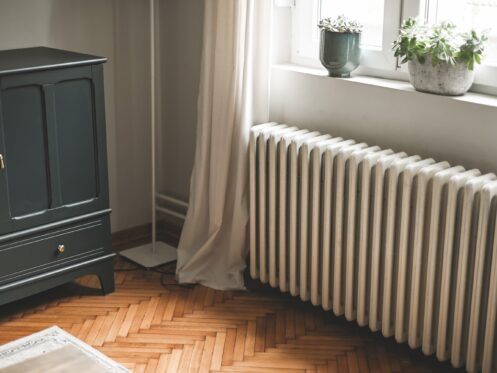
Balancing your radiators is simply the process of adjusting the flow of hot water or steam throughout your entire heating system. This ensures that all your radiators heat up at roughly the same rate for optimal comfort. It’s very common for most central heating systems to have the boiler pump hot water through a series of pipes that feed your radiators.
Without proper balancing, the radiator closest to your boiler will receive the largest amount of hot water flow. This will cause them to heat up more quickly than radiators that are further away. This could leave rooms furthest away much cooler than the rooms closer to your boiler pump. Proper balancing helps ensure that all your radiators receive the right amount of hot water to heat all the rooms in your home evenly and create a comfortable environment.
The Whys Behind Radiator Balancing
Before we dive into the specifics of how to identify if your radiators need balancing and how to do the balancing process, it’s first important to understand the whys behind radiator balancing in the first place. One of the most obvious reasons to balance your radiators is that it provides a more comfortable living environment, as all your rooms stay at the same temperature.
Balancing your radiators allows your heating system to operate more efficiently because it won’t be constantly overworking, as you continue to set your thermostat up to compensate for the colder spots throughout your home. Properly balanced systems use much less fuel, resulting in lower utility bills for you. They also have a shorter runtime, which reduces the strain on your heating system and extends its overall longevity.
Signs You Need Radiator Balancing
As a homeowner, it’s important to understand the key signs that your radiators need to be balanced so that you can react relatively quickly. The most obvious sign that you need radiator balancing is when you have cold spots throughout your home created by uneven radiator heating. This becomes most apparent when the radiators furthest from your boiler feel much cooler than those closest to it. If you’ve recently had a new radiator installed, a new boiler put in, or even system repairs, it’s best to consider rebalancing your radiators for optimal system performance.
A Quick Recap of How Radiator Systems Work
Before we give you a step-by-step guide on balancing your radiators, we’ll recap how a radiator system works below for your convenience. Your system all starts with the boiler, which is responsible for heating water. The boiler pump will push hot water or steam through the various pipes throughout your home that connect the pump to each radiator.
Piping is categorized as either flow piping or return piping. Flow piping is the pipe that delivers hot water or steam to all your radiators. Return piping is the piping that carries the colder water back to your boiler to be reheated. Radiator valves control the water flow into each radiator. The lockshield valve limits how much water enters each radiator. You can find this valve usually underneath the plastic cap on each radiator, and it’s the key to balancing your system.
4 Steps to Radiator Balancing
When it comes to balancing your radiators, it’s always best to leave the job up to a professional technician with the hands-on expertise to do it correctly. However, it’s helpful for homeowners to understand the step-by-step process our HVAC technicians use to balance radiator systems properly. This can give you a better understanding of how your system works and allow you to more readily identify when there are system problems.
1. Radiator Bleeding
The first thing our technicians will do is turn off your heating system and bleed each radiator. Radiators are bled with a specific radiator key that releases trapped air inside the unit. This helps ensure accurate heat distribution during the balancing process.
2. Identifying Problem Units
Once all the radiators are properly bled, we’ll turn your heating system back on. Our technician will assess each radiator and take note of any issues. For example, they’ll typically make a list of fastest to slowest heating for all your radiators to determine whether the radiators closest to your boiler are heating up faster. It’s important to understand the key radiator problems your system has so that we can work to promptly fix them with our balancing process.
3. Open Valves and Measure Temperature Differences
Next, our technician will open the lockshield valve on all your radiators and let your system run. They’ll use a special thermometer to measure the temperature of the flow pipe and return pipe for each radiator. With optimal efficiency, there should be a 12- to 20-degree difference between the temperatures of your flow and return pipes. If the temperature difference is less, it’s a key indicator that your radiators are taking in too much hot water or steam.
4. Adjust the Lockshield Valves
Our heating technicians will strategically adjust the lockshield valves on all your radiators until proper balance is achieved. They’ll start with the radiator closest to your boiler, which will typically get the hottest, the fastest. They’ll work to slightly close the lockshield valve and make gradual adjustments down the line until even heating is obtained. Our technicians are looking for that desirable 12 to 20-degree difference in the flow and return pipes.
Other Helpful Tips for Even Home Heating
While radiator balancing is a great way to optimize the heating of your home, it’s just one of many strategies you can use to enhance your comfort. Insulating your piping can help keep your steam or hot water warmer as it travels longer distances to your furthest radiators. Getting boiler service annually will help prevent system inefficiencies.
If you have a two-story home or a very large home that has problems with uneven heating and cooling, you may want to consider a zoned heating system. This can allow you to accommodate issues like the natural rising of heat to your second story. Routine radiator flushing is best when you have hard water, as it can lead to sludge and unwanted internal corrosion. Both factors can contribute to inefficient system heating. Additionally, ensure proper home insulation and seal up any new air leaks on your exterior walls.
Expert Radiator Maintenance Service
F.F. Hitchcock Plumbing, Heating & Cooling offers expert radiator maintenance service for the Cheshire, CT area. We can also assist with all your radiator installation, replacement, and prompt repair needs. Call our office staff today to book your next service consultation with one of our helpful heating technicians.