
One of the most serious plumbing problems that you can face as a homeowner is a slab leak. Unfortunately, this plumbing leak can go undetected for months or even years while it causes damage to your home’s foundation. Below, we’ll discuss tips on detecting slab leaks and preventing them.
What Is a Slab Leak?
A slab leak happens when one of the water pipes installed underneath your home’s concrete foundation develops a leak. Because it’s hidden underneath your concrete, it’s no surprise that this type of leak goes undetected for so long. There are two different types of pipes underneath your concrete foundation, which are freshwater supply pipes and wastewater removal pipes.
With concrete being an obvious barrier that prevents any seepage from appearing on the surface of your basement, water must seep down into the surrounding soil. This will slowly erode the foundation of your home. In severe cases of a slab leak that’s left untreated, it can compromise your home’s entire structural stability.
Causes of a Slab Leak
Any leakage of fresh water from your water supply lines or wastewater from your wastewater disposal system is a big problem, usually requiring emergency service from a 24/7 plumber. Unfortunately, there are several different factors that can contribute to the development of a slab leak at your home. By understanding what these causes are, you can more effectively work to prevent them from happening in the first place.
Poor Installation
One of the most obvious causes of a slab leak boils down to poor installation. Without proper installation, your piping can develop bends, weak joints, and bellies in poorly supported pipes. This is why it’s so important to always have a professional do the installation process for you when it comes to running any sort of water supply or wastewater disposal line for your home.
Pipe Corrosion
If you have an older home that was constructed with copper or galvanized steel piping, your likelihood of developing a slab leak will increase. While these are very durable materials, they will corrode over time as they’re exposed to chemicals in the soil and constant water. Corrosion will eventually eat away at the piping walls and lead to pinhole leaks that get worse over time.
Soil Pressure and Shifting
The reason behind your slab leak may not be your piping at all. It could be the soil conditions that’re causing your piping to move out of its original position. Expansive soils, such as clay, shrink when they dry and swell when they’re wet. This constant back-and-forth movement places stress on your pipes and their joints. Additionally, issues like nearby construction, erosion, and even earthquakes can all cause shifting in the soil that results in pipe cracking.
Friction and Abrasion
Unfortunately, if your piping is installed against existing concrete, gravel, or another abrasive material, it’s more susceptible to leaking. This happens as water travels through the pipe and causes vibrations. As the pipe vibrates, it creates friction against the surrounding abrasive materials that will eventually wear holes in the walls of your piping.
Keys Signs of a Slab Leak
Since diagnosing a slab leak as early as possible helps minimize the amount of damage that occurs to your home’s foundation, it’s highly advantageous to understand the key warning signs. Below, we’ll give you some subtle indicators that you may have a slab leak at your home so that you can seek out our professional assistance before it gets any worse.
Unexplained Water Bill Spike
One of the most obvious signs of a slab leak is an unexplained spike in your existing water bill. If you notice your water bill is much higher and there’s no reason that you can think of why that changed, there’s a leak somewhere in your home. One of the easiest ways to verify that you have a water leak is to shut off all the water in your home. Head outside and take a reading for your water meter. Give it about 15 minutes and look at the meter again to see if the number went up. If it did, you have a water leak.
Low Water Pressure
Another key indicator that you may have a slab leak is low water pressure throughout your entire home. As water diverts through the broken line, it will reduce the amount of water making its way into your home. It’s best to check with your neighbors to ensure they’re not experiencing low water pressure. If the problem is unique to your home and all your fixtures are having the same issue, it’s very likely you have a slab leak.
Persistent Damp Soil
One other key sign of a slab leak is persistently damp soil. If you start to notice unexplained puddles lingering around your home’s foundation that don’t seem to go away over time, it’s likely there’s a leak supplying that persistent dampness.
Professional Slab Leak Detection
If you’ve noticed any of the subtle signs above of a potential slab leak at your home, it’s best to contact us promptly. Our plumbers will use various leak detection methods to confirm the presence of the leak and pinpoint its existing location. One of the easiest methods we can use is our acoustic listening devices. This is where we use very sensitive microphones to amplify the sound of water escaping from a pressurized pipe.
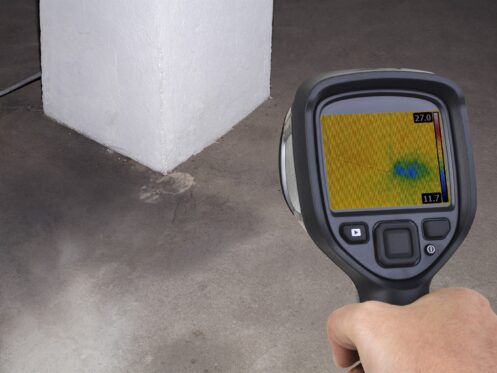
Another common method that we use is infrared thermal imaging. By using thermal cameras, we can detect variations in the temperature of your flooring that will reveal hot or cold spots from potential water leaks in the main line underneath your slab. We can do pressure testing to isolate sections of your plumbing system to see if there’s a difference in the pressure. Leak detection gas is a non-toxic tracer that we pump into your pipe to see where the gas seeps back out.
Slab Leak Prevention
While not all slab leaks are preventable, you can greatly reduce your risk of experiencing one by being proactive with your maintenance and property care. Ensure you have a pressure regulator on your home if your water pressure is consistently above 80 PSI. Make it a habit to get an annual plumbing inspection so one of our professionals can spot the issue as early as possible.
If you know that you have outdated piping, it’s best to schedule an upgrade before you experience a major issue like a slab leak. Proper gutter cleaning and positioning of your downspouts will keep water away from your home’s foundation. This will also prevent the soil from swelling and shifting, which can stress out your piping.
Reliable Slab Leak Detection Services
F.F. Hitchcock Plumbing, Heating & Cooling offers reliable slab leak detection services for the Cheshire, CT area. We can also assist with all your plumbing repairs, drain cleaning, and other related plumbing needs. Simply phone our office today to book your next service appointment with one of our highly experienced plumbers.